If you have ever felt overwhelmed by the conflicting advice surrounding nutrition, you are not alone. One day, you might read that you’re eating too much protein; the next, an influencer claims you aren’t eating nearly enough. It is easy to get lost in the noise of “one-size-fits-all” recommendations that rarely account for individual lifestyles. So, how much protein do you need per day? Well, it depends.
The truth is that protein needs are highly personal. What works for a professional athlete won’t necessarily work for a busy parent trying to stay energized for a workday and family time. Understanding your specific numbers is the first step toward building a sustainable routine. Before you start planning your next high-protein meal prep for the week, it helps to understand exactly why you are prioritizing this nutrient and how to calculate the right amount for your body. Once you understand how much protein you need per day, building meals becomes much easier — especially if you rely on simple options like high-protein meals for busy professionals.
Why Protein Is Essential for Daily Health
Protein is often called the building block of life, and for good reason. It is not just about building big muscles at the gym; it is essential for almost every function in your body. When you eat a high-protein meal, your body breaks that protein down into amino acids, which are used to repair tissues, support your immune system, and create enzymes and hormones.
For busy adults, protein plays two other critical roles: satiety and energy regulation. Unlike carbohydrates, which can sometimes lead to blood sugar spikes and crashes, protein digests slowly. This helps keep you feeling fuller for longer, preventing that mid-afternoon slump where you might otherwise reach for sugary snacks. Additionally, protein has a higher “thermic effect” than fats or carbs, meaning your body burns more calories just by digesting it.
How Much Protein Do You Need Per Day?
If you have ever wondered how much protein you need per day, the answer is not universal. Your ideal daily protein intake depends on your lifestyle, body weight, and goals rather than generic nutrition advice. Understanding how much protein you need per day depends on your body weight, activity level, and personal health goals. The Recommended Dietary Allowance (RDA) for protein is often cited as 0.8 grams per kilogram of body weight. However, many nutrition experts argue that this is the minimum amount needed to prevent deficiency, not the optimal amount for health, energy, or weight management.
Protein Intake by Activity Level
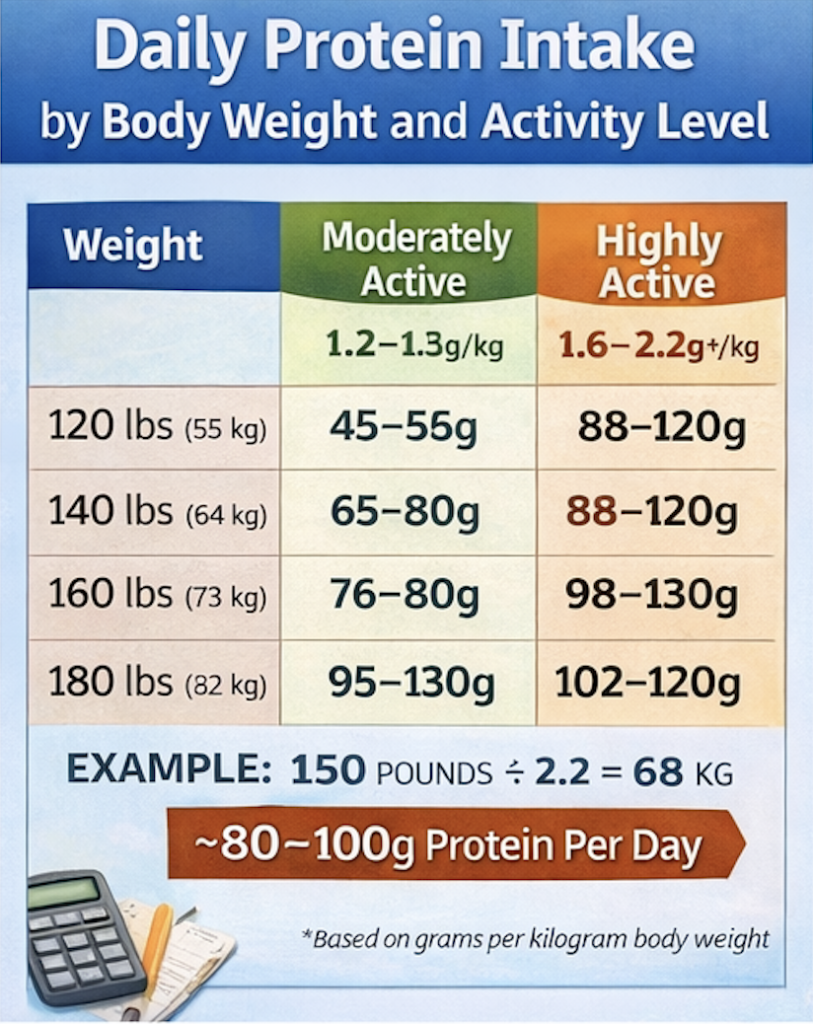
To get a clearer picture, it is helpful to look at grams per kilogram of body weight based on your activity level.
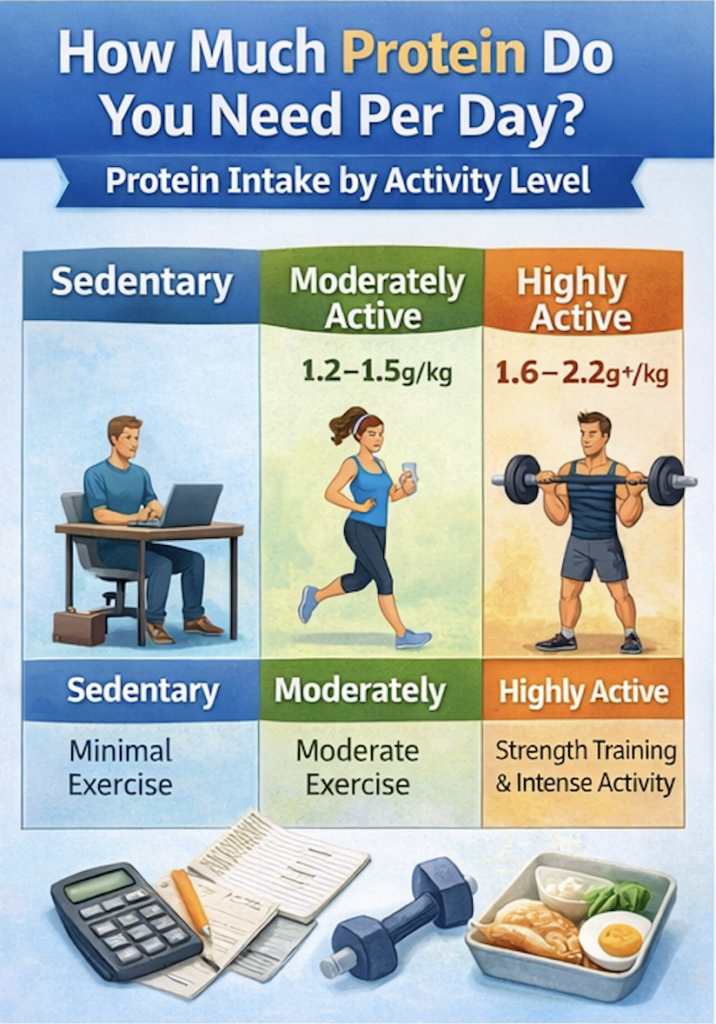
- Sedentary Adults: 0.8 – 1.0 grams per kg
- Active Adults (Moderate Exercise): 1.2 – 1.5 grams per kg
- Highly Active / Resistance Training: 1.6 – 2.0+ grams per kg
A Simple Calculation Example
Let’s say you are a moderately active woman who weighs 150 pounds. First, convert your weight to kilograms by dividing by 2.2.
- 150 lbs ÷ 2.2 = 68 kg
If your goal is moderate activity (1.2 to 1.5g per kg):
- Lower end: 68 kg x 1.2 = 81.6 grams
- Higher end: 68 kg x 1.5 = 102 grams
In this scenario, aiming for roughly 80 to 100 grams of protein per day gives you a clear target. This personalized number ensures that every high-protein meal you prepare is contributing to a tangible goal rather than a guess.
Protein Needs Based on Your Goals
Your daily target isn’t just about how much you move; it is also about what you want to achieve. Adjusting your intake based on your specific goals can make your diet more effective.
Protein Intake for Weight Loss
When focusing on weight loss, protein is your strongest ally. Higher protein intake helps preserve lean muscle mass while you are in a calorie deficit. This is crucial because muscle tissue burns more calories at rest than fat tissue does. According to research published in the American Journal of Clinical Nutrition, higher protein diets significantly improve appetite control and satiety.
Eating a high-protein meal triggers the release of hormones that signal fullness to your brain. This makes it easier to stick to your calorie goals without feeling constantly hungry or deprived. If you are cutting calories, aiming for the higher end of the protein range (around 1.6g/kg or higher) can be very beneficial.
Protein Intake for Muscle Maintenance and Gain
If you are incorporating resistance training into your weekly routine, your muscles require more amino acids to repair the micro-tears caused by exercise. This repair process is what makes muscles stronger and more defined over time.
For those focused on maintenance or gain, timing can be relevant, but total daily intake is the most important factor. Ensuring you have a high-protein meal available after a workout helps kickstart recovery. The International Society of Sports Nutrition suggests that active individuals may need anywhere from 1.4 to 2.0 grams per kg to maintain and build muscle effectively.
How Much Protein Do Women and Men Need Per Day?
There is a common misconception that women need significantly less protein than men, or that eating a high-protein meal will make women “bulky.” In reality, protein needs are determined much more by body weight, body composition, and activity level than by gender alone.
While men generally have higher calorie and protein needs because they tend to have more muscle mass and weigh more, a woman of the same weight and activity level as a man would have very similar protein requirements per kilogram.
- Typical Range for Women: Often falls between 75g and 120g per day, depending on goals.
- Typical Range for Men: Often falls between 100g – 160g+ per day.
Focus on your personal metrics rather than generalized gender-based advice.
What Does Daily Protein Intake Look Like in Real Food?
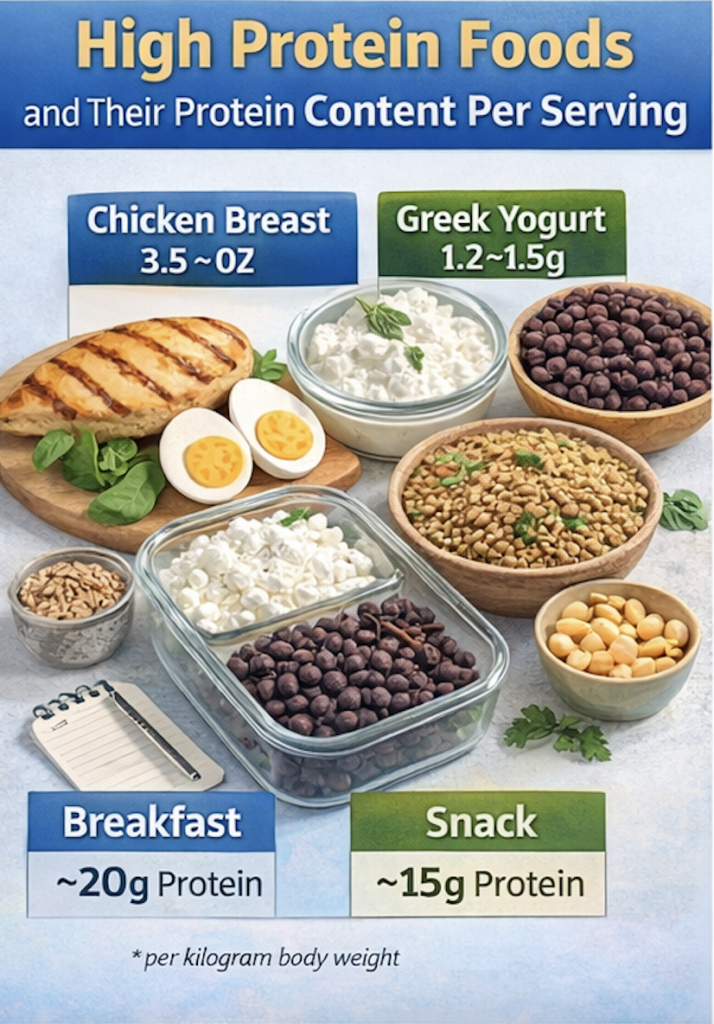
Knowing your number is one thing; putting it on a plate is another. You don’t need a calculator at the dinner table, but having a visual idea helps. A standard high-protein meal generally contains 20 to 30 grams of protein.
Here are some whole-food staples and their approximate protein counts:
- Chicken Breast (cooked, 3.5 oz): ~31g
- Salmon (3 oz): ~19g
- Eggs (2 large): ~12g
- Greek Yogurt (1 cup, non-fat): ~20g
- Black Beans (1 cup cooked): ~15g
- Tofu (3.5 oz): ~8g
Many of these foods can be prepared quickly using strategies from our guide to high-protein meals under 400 calories.
A Sample Daily Breakdown (Aiming for ~100g)
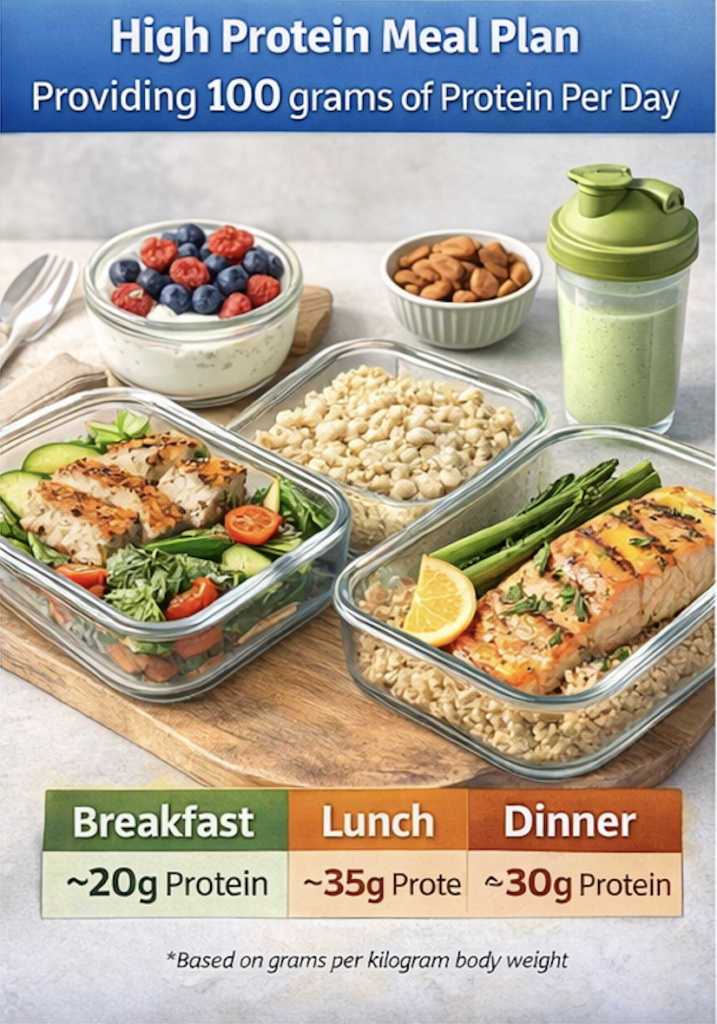
- Breakfast: A quick scramble with 2 eggs, egg whites, and spinach.
- Protein: ~20g
- Lunch: A large salad topped with grilled chicken breast and chickpeas. This is a classic, portable high-protein meal perfect for work.
- Protein: ~35g
- Snack: A small bowl of Greek yogurt with berries.
- Protein: ~15g
- Dinner: Baked salmon with quinoa and roasted asparagus.
- Protein: ~30g
Total: ~100g protein.
This approach uses simple, budget-friendly ingredients found in any grocery store, proving that hitting your goals doesn’t require fancy products. If mornings are your biggest challenge, you may also enjoy these high-protein breakfasts without protein powder.
Common Protein Intake Mistakes to Avoid
Even with the best intentions, it is easy to fall into patterns that hinder your progress.
One major mistake is “backloading” protein—eating very little all day and trying to cram it all into a huge dinner. Your body utilizes protein best when it is spread out throughout the day. If you skip protein at breakfast, you miss a key opportunity to stabilize your blood sugar for the morning. Aim to include a meaningful source of protein in every high-protein meal or snack you consume.
Another common error is over-relying on processed bars and shakes. While convenient, they often lack the fibre and micronutrients found in whole foods. Real food keeps you fuller and provides a broader range of nutrients.
Do You Need Protein Powder to Meet Your Daily Protein Needs?
Walk into any health store, and you will see walls of tubs and powders. It begs the question: Is powder necessary for a healthy high-protein meal plan?
The short answer is no. Protein powder is a supplement, meaning it is meant to supplement a diet, not define it. If you can hit your daily protein target using chicken, fish, beans, lentils, eggs, and dairy, you do not need powder.
However, for busy adults, convenience is a valid factor. If blending a scoop of whey or plant-based powder into a smoothie helps you get a nutritious breakfast on a busy morning, it is a great tool. Just remember to prioritize a “food-first” approach whenever possible. As noted by Harvard Health Publishing, getting protein from whole food sources is generally preferable because you also gain the benefits of other nutrients naturally present in the food.
Final Thoughts on Daily Protein Requirements
Calculating your protein needs might feel like a math assignment at first, but it quickly becomes second nature. Remember that these numbers are targets, not strict laws. If you aim for 100 grams and hit 90 one day and 110 the next, you are doing great. Consistency matters more than perfection.
Understanding your protein needs per day makes it easier to plan balanced, high-protein meals without relying on guesswork. You will stop guessing and start building each high-protein meal with confidence, knowing it is fueling your busy life, supporting your metabolism, and keeping you satisfied. Start with simple changes, like adding an extra egg to breakfast or a scoop of beans to your lunch, and watch how much better you feel.
Disclaimer: This content is for informational purposes only and does not constitute medical advice. Please consult with a healthcare provider or registered dietitian before making significant changes to your diet or exercise routine.