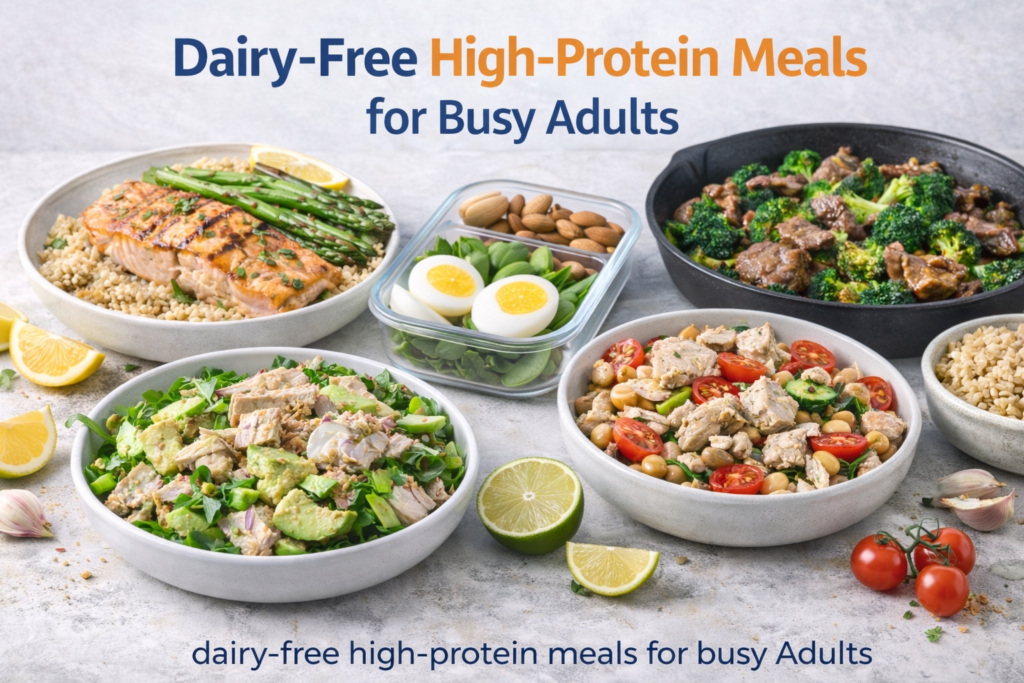
Finding time to prepare dairy-free high-protein meals can feel overwhelming when you’re juggling work, family, and daily responsibilities. Many convenient protein options rely heavily on yogurt, cheese, or whey-based products, making it difficult for those avoiding dairy to meet their nutrition goals. Whether you’re lactose intolerant, managing an allergy, or simply choosing a dairy-free lifestyle, building balanced high-protein meals is absolutely possible — and easier than you think.
Fortunately, nature provides an abundance of protein sources that do not require dairy products. Focusing on whole foods such as lean meats, fish, eggs, legumes, and nuts allows you to construct a diet that supports muscle maintenance and satiety without digestive discomfort. This guide aims to simplify your meal planning process by providing clear, actionable options that fit into a busy lifestyle.
We will explore the physiological benefits of protein and why it serves as a cornerstone of a healthy diet. More importantly, this article provides a comprehensive list of dairy-free high-protein meals that you can prepare quickly. These recipes prioritize whole ingredients and simple preparation methods, ensuring that healthy eating remains accessible even on your busiest days. By the end of this post, you will have a toolkit of recipes and strategies to fuel your body effectively. If you’re new to protein-focused eating, check out our Beginner’s Guide to High-Protein Eating.
Why Protein Matters in Dairy-Free High-Protein Meals
Protein plays a critical role in almost every biological process within the human body. Unlike carbohydrates and fats, which the body stores for later use, your body does not store amino acids, the building blocks of protein. This means you must consume adequate protein consistently to maintain health.
One of the primary benefits of a high-protein diet is satiety. Protein reduces the level of the hunger hormone ghrelin while boosting the peptide YY, a hormone that makes you feel full. This can be particularly helpful for busy adults who want to avoid the mid-afternoon energy crash that often leads to unhealthy snacking. According to research published in the American Journal of Clinical Nutrition, higher protein intake increases satiety and aids in weight management significantly better than lower protein diets.
Furthermore, protein has a higher thermic effect of food (TEF) compared to fats or carbohydrates. This means your body uses more energy to digest, absorb, and utilize protein nutrients. While this does not replace the need for exercise, it does contribute to a more active metabolism. Finally, protein is essential for the repair and maintenance of tissues. Whether you are recovering from a workout or simply navigating the physical demands of daily life, adequate protein intake ensures your muscles and tissues can recover and function optimally. Trying to save money while eating well? Don’t miss our Budget-Friendly High-Protein Meals guide. According to Harvard Health Publishing, adequate protein intake supports muscle preservation and metabolic health, particularly as adults age.
10 Simple Dairy-Free High-Protein Meals
Here are ten meals and snacks designed to fit seamlessly into a busy schedule. Each option focuses on whole foods and eliminates dairy while delivering substantial protein.
1. Grilled Salmon and Asparagus
Salmon is a nutritional powerhouse, offering high-quality protein and essential omega-3 fatty acids. This meal is perfect for a quick dinner that feels luxurious without requiring hours in the kitchen.
Estimated Macros:
- Calories: 450
- Protein: 35g
- Carbs: 8g
- Fat: 28g
Ingredients:
- 6 oz wild-caught salmon fillet
- 1 bunch fresh asparagus spears
- 1 tablespoon olive oil
- Lemon slices, salt, and black pepper
Preparation:
Brush the salmon and asparagus with olive oil and season with salt and pepper. Grill or bake at 400°F (200°C) for 12–15 minutes until the fish flakes easily with a fork.
2. Turkey and Sweet Potato Skillet
Ground turkey is a lean, versatile meat that absorbs flavours well. This skillet meal combines protein with complex carbohydrates from sweet potatoes, making it one of the most balanced dairy-free high-protein meals for post-work recovery.
Estimated Macros:
- Calories: 380
- Protein: 30g
- Carbs: 35g
- Fat: 14g
Ingredients:
- 5 oz lean ground turkey (93% lean)
- 1 medium sweet potato, diced into small cubes
- 1/2 cup spinach
- 1/2 teaspoon smoked paprika and garlic powder
Preparation:
Sauté the sweet potato cubes in a skillet with a splash of oil until soft, then add the turkey and spices, cooking until browned. Stir in the spinach at the very end until it wilts.
3. Hard-Boiled Eggs and Almonds Snack Box
Sometimes a full meal isn’t possible, and you need a substantial snack to bridge the gap between meetings. Eggs provide a complete amino acid profile, and almonds add healthy fats and crunch.
Estimated Macros:
- Calories: 320
- Protein: 18g
- Carbs: 6g
- Fat: 25g
Ingredients:
- 2 large hard-boiled eggs
- 1 oz (approx. 23) raw almonds
- Salt and pepper to taste
Preparation:
Boil a batch of eggs at the start of the week for easy access. Peel two eggs and pack them in a container with the almonds for a portable, nutrient-dense snack.
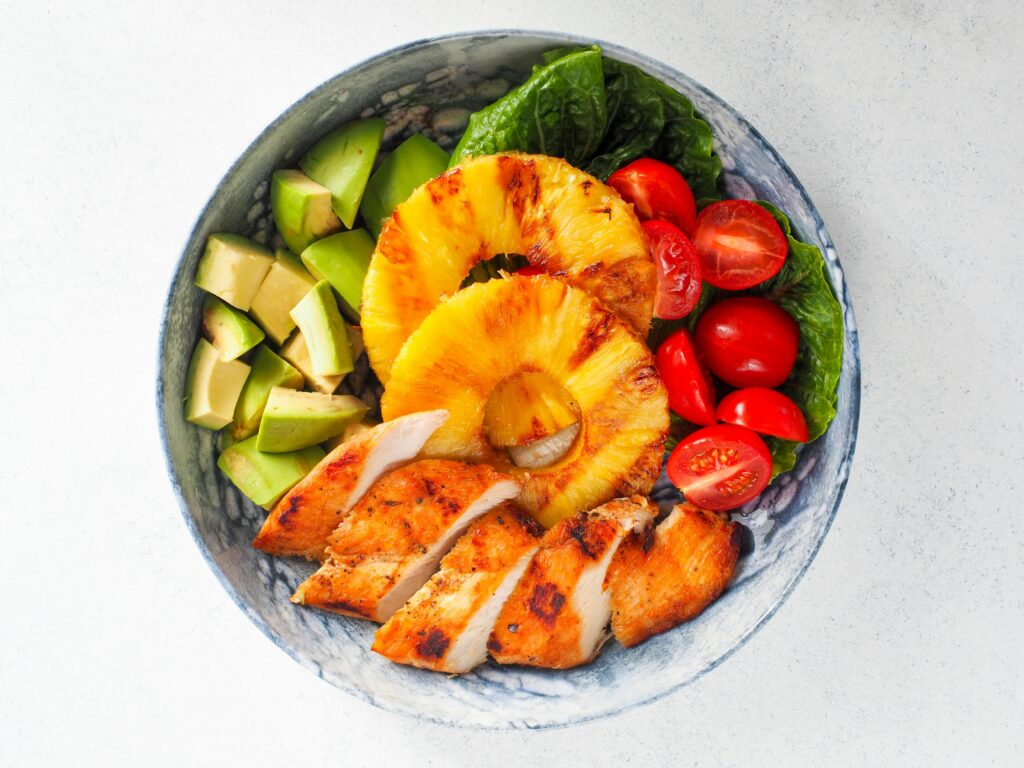
4. Chicken and Avocado Salad
This is a staple for anyone seeking dairy-free high-protein meals that require zero cooking time if you use pre-cooked chicken. The avocado provides a creamy texture that mimics cheese or dressing, making dairy unnecessary.
Estimated Macros:
- Calories: 420
- Protein: 35g
- Carbs: 12g
- Fat: 26g
Ingredients:
- 5 oz cooked chicken breast, shredded or cubed
- 1/2 ripe avocado
- 1 tablespoon diced red onion
- 4 cherry tomatoes
- 2 slices of pineapple
- 1 cup mixed greens
- Lime juice
Preparation:
Mix the chicken, avocado, onion, tomato, pineapple and lime juice in a bowl until combined. Serve the mixture over a bed of mixed greens.
5. Beef and Broccoli Stir-Fry
This classic dish is naturally dairy-free and loaded with iron and vitamins. By making it at home, you control the sodium levels and ensure high-quality oil is used.
Estimated Macros:
- Calories: 400
- Protein: 32g
- Carbs: 15g
- Fat: 22g
Ingredients:
- 5 oz flank steak, thinly sliced
- 2 cups broccoli florets
- 1 tablespoon sesame oil
- 2 tablespoons coconut aminos (soy sauce alternative)
- Minced ginger and garlic
Preparation:
Sear the beef strips in a hot wok or skillet with sesame oil for 2 minutes, then remove. Stir-fry the broccoli with garlic, ginger, and coconut aminos until tender-crisp, then return the beef to the pan to heat through.
6. Lentil and Quinoa Bowl
For a plant-based option, combining lentils and quinoa creates a complete protein source. This meal is high in fibre, which aids digestion and promotes heart health.
Estimated Macros:
- Calories: 360
- Protein: 18g
- Carbs: 58g
- Fat: 6g
Ingredients:
- 1/2 cup cooked green lentils
- 1/2 cup cooked quinoa
- 1/2 cup diced cucumber
- 1 tablespoon lemon vinaigrette
- Fresh parsley
Preparation:
Combine the cooked lentils and quinoa in a bowl (these can be prepped in advance). Toss with cucumber, parsley, and vinaigrette before serving.
7. Canned Tuna and White Bean Salad
Canned tuna is an affordable and convenient pantry staple. Mixing it with white beans creates one of the easiest dairy-free high-protein meals available, offering a double dose of protein from both seafood and legumes.
Estimated Macros:
- Calories: 350
- Protein: 38g
- Carbs: 25g
- Fat: 10g
Ingredients:
- 1 can (5 oz) tuna packed in water, drained
- 1/2 cup cannellini beans, rinsed
- 1 tablespoon olive oil
- 1 teaspoon dried oregano
- Cherry tomatoes
Preparation:
In a medium bowl, flake the tuna and gently toss with the beans, tomatoes, olive oil, and oregano. Season with salt and enjoy immediately.
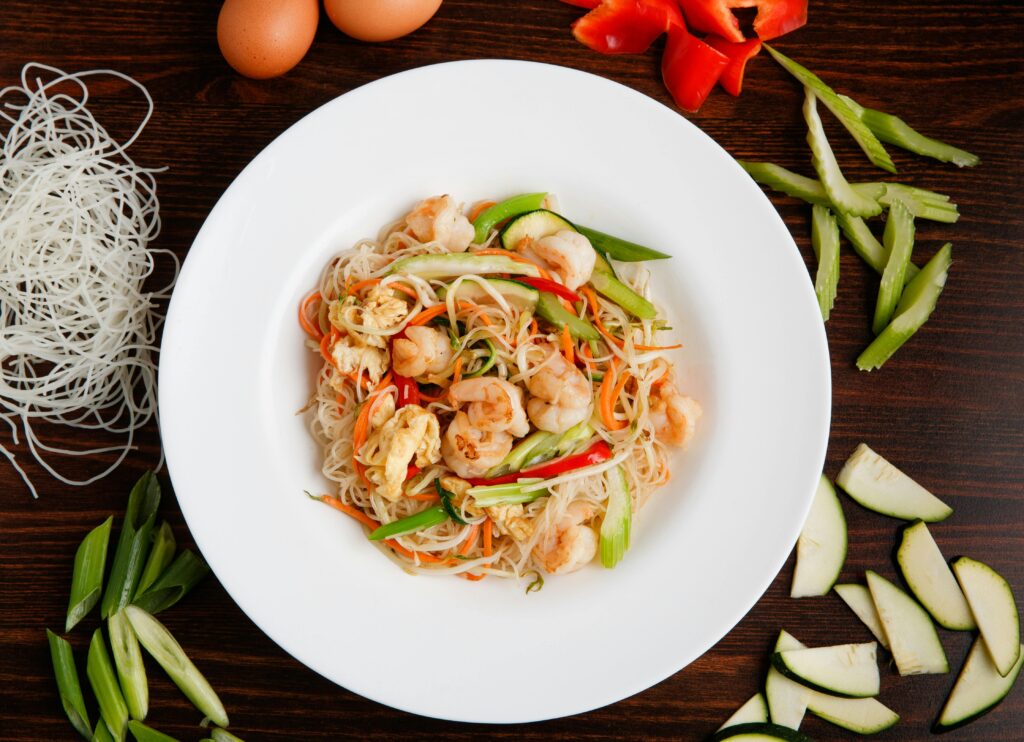
8. Shrimp and Zucchini Noodles
Shrimp is incredibly lean and cooks in minutes. Pairing it with zucchini noodles keeps the meal light but filling, perfect for a late dinner when you don’t want a heavy stomach before bed.
Estimated Macros:
- Calories: 250
- Protein: 30g
- Carbs: 10g
- Fat: 8g
Ingredients:
- 6 oz raw shrimp, peeled and deveined
- 1 large zucchini, spiralized into noodles
- 1 tablespoon olive oil
- Red pepper flakes and garlic
Preparation:
Sauté shrimp in olive oil with garlic and red pepper flakes until pink (about 3 minutes). Add the zucchini noodles to the pan and toss for 1-2 minutes until just warm.
9. Chia Seed Protein Pudding
Most puddings rely on milk, but this version uses almond milk and protein powder. It works excellently as a breakfast or a post-workout snack.
Estimated Macros:
- Calories: 300
- Protein: 25g
- Carbs: 15g
- Fat: 14g
Ingredients:
- 3 tablespoons chia seeds
- 1 scoop dairy-free protein powder (pea or rice protein)
- 1 cup unsweetened almond milk
- Dash of cinnamon
Preparation:
Whisk the protein powder into the almond milk until smooth, then stir in the chia seeds. Let the mixture sit in the refrigerator for at least 2 hours or overnight to thicken.
10. Bison Burger with Avocado Bun
Bison is leaner than traditional beef and has a distinct, rich flavour. Using lettuce wraps or sturdy greens instead of a bun keeps this meal focused on high-quality proteins and fats.
Estimated Macros:
- Calories: 410
- Protein: 35g
- Carbs: 5g
- Fat: 28g
Ingredients:
- 5 oz ground bison patty
- 2 large romaine lettuce leaves or collard greens
- 1/4 avocado, sliced
- Tomato slice and mustard
Preparation:
Grill or pan-sear the bison patty to your desired doneness. Wrap the burger in the lettuce leaves and top with avocado, tomato, and mustard.
How to Make Dairy-Free High-Protein Meals Easier
Transitioning to a diet focused on dairy-free, high-protein meals becomes significantly easier with a few strategic habits. Preparation is key. Busy adults rarely have time to cook from scratch three times a day. Dedicate one hour on the weekend to batch-cooking staple ingredients like hard-boiled eggs, quinoa, grilled chicken breasts, or roasted vegetables. Having these components ready allows you to assemble meals in minutes rather than hours.
Another vital tip is to read labels carefully. Many processed “health foods” or protein bars use casein or whey (milk derivatives) as their primary protein source. Look for pea, hemp, brown rice, or egg white protein instead. According to the Mayo Clinic, reading nutrition labels is a crucial step in managing dietary restrictions effectively.
Finally, keep your pantry stocked with shelf-stable proteins. Canned sardines, tuna, salmon, beans, and lentils are lifesavers when you have not had time to shop. These items ensure that you always have access to high-quality nutrition without needing to order takeout. Looking for more fast dinner ideas? Explore our High-Protein Meals You Can Make in 30 Minutes.
Dairy-Free High-Protein Meal FAQs
Q: Will I get enough calcium if I stop eating dairy?
A: Yes, you can obtain sufficient calcium from non-dairy sources. Leafy greens like kale and bok choy, almonds, sardines with bones, and fortified plant milks are excellent sources. The National Institutes of Health reports that fortified plant milks and leafy greens can provide sufficient calcium intake without dairy.
Q: Are plant-based proteins as effective as meat?
A: Plant-based proteins can be just as effective, though some are not “complete” proteins (meaning they lack certain amino acids). However, by eating a variety of plant foods—such as mixing legumes with grains—you provide your body with all the necessary amino acids for muscle repair.
Q: How can I add flavour to dairy-free high-protein meals without cheese?
A: Use fats and acids to flavour. Avocado, olive oil, and tahini provide creaminess, while lemon juice, vinegar, and fresh herbs add brightness. Nutritional yeast is also a popular pantry staple that adds a cheesy, nutty flavour to dishes without containing any actual dairy.
Conclusion
Adopting a diet rich in dairy-free high-protein meals does not require complicated recipes or obscure ingredients. By focusing on whole foods like lean meats, fish, eggs, and legumes, you can fuel your body effectively while accommodating your busy schedule. The recipes provided here offer a starting point for a diverse and satisfying menu that prioritizes your health and energy levels. Remember that consistency is more important than perfection; finding a few go-to meals that you enjoy is the key to long-term success.
Disclaimer: The content provided in this article is for informational purposes only and does not constitute medical advice. Always consult with a qualified healthcare provider or nutritionist before making significant changes to your diet.