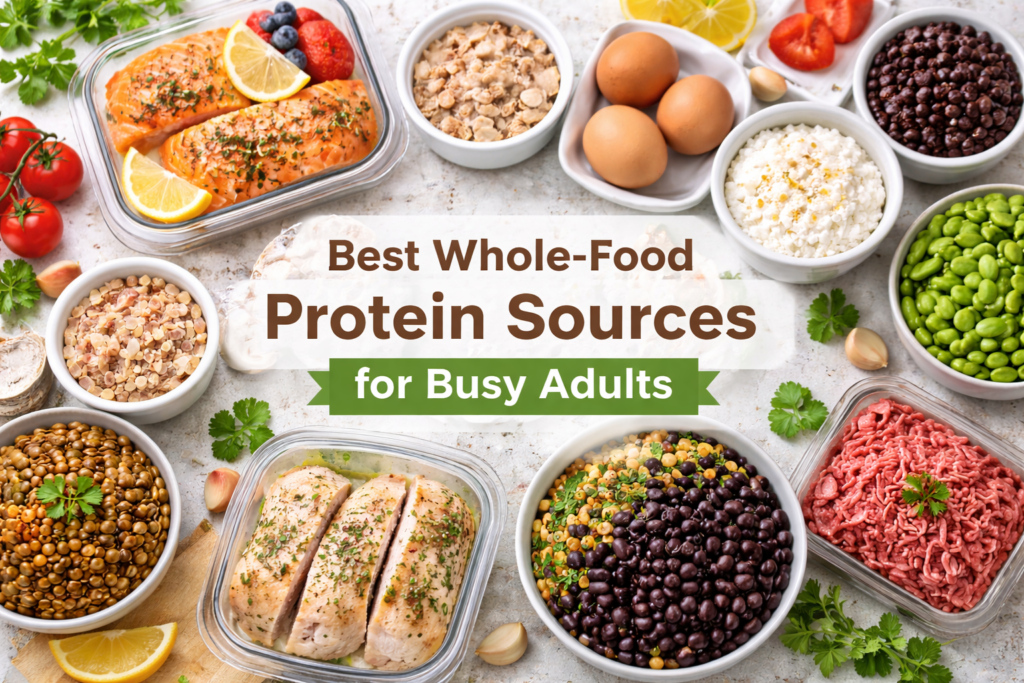
Whole-food protein sources are one of the simplest and most effective ways for busy adults to improve energy, support metabolism, and stay full longer. In a world filled with protein powders and supplements, it’s easy to overlook the power of real food. The truth is, whole-food protein sources provide not only high-quality protein but also essential vitamins, minerals, healthy fats, and fibre that supplements simply can’t match.
If you’re juggling work, family, and health goals, focusing on nutrient-dense, whole-food protein sources can simplify your routine while helping you meet your daily protein needs—without relying on shakes or bars.
In this article, we will explore the benefits of prioritizing protein from natural sources. We will provide a comprehensive list of the top whole-food protein sources that are easy to find at your local grocery store. You will also find a breakdown of estimated nutritional values to help you make informed choices, along with practical tips for integrating these foods into a hectic schedule. By the end of this post, you will have a clear roadmap to increasing your protein intake simply and deliciously, without a single scoop of powder in sight.
Why Whole-Food Protein Matters for Satiety, Energy, and Metabolism
Before we dive into the specific foods, it helps to understand why protein is such a critical component of a balanced diet. Protein is often called the building block of life because it plays a vital role in repairing tissues, making enzymes, and supporting immune function. However, for busy adults, the benefits of whole-food protein sources go beyond cellular repair—they directly impact how you feel and function every day.
One of the most immediate benefits of eating adequate protein is satiety. Unlike refined carbohydrates, which can cause blood sugar spikes followed by crashes, protein digests slowly. This helps you feel fuller for longer periods, reducing the urge to snack on processed foods between meals. Research from Harvard Health suggests that incorporating high-quality protein into your meals can be an effective strategy for weight management because it naturally curbs appetite.
Furthermore, protein has a higher thermic effect of food (TEF) compared to fats and carbohydrates. This means your body uses more energy (calories) to digest, absorb, and process nutrients from protein. While this isn’t a magic bullet for weight loss, it does contribute to a healthy metabolism. Stable energy levels are another key advantage. By anchoring your meals with solid, whole-food protein sources, you provide your body with a steady stream of fuel, preventing the energy rollercoasters that make busy days feel even harder.
Top 10 Whole-Food Protein Sources
Here are ten accessible, nutrient-dense foods that serve as excellent whole-food protein sources. These staples are versatile, widely available, and perfect for quick meals.
Note: Macro estimates are averages and can vary based on brand, cooking method, and specific cuts.
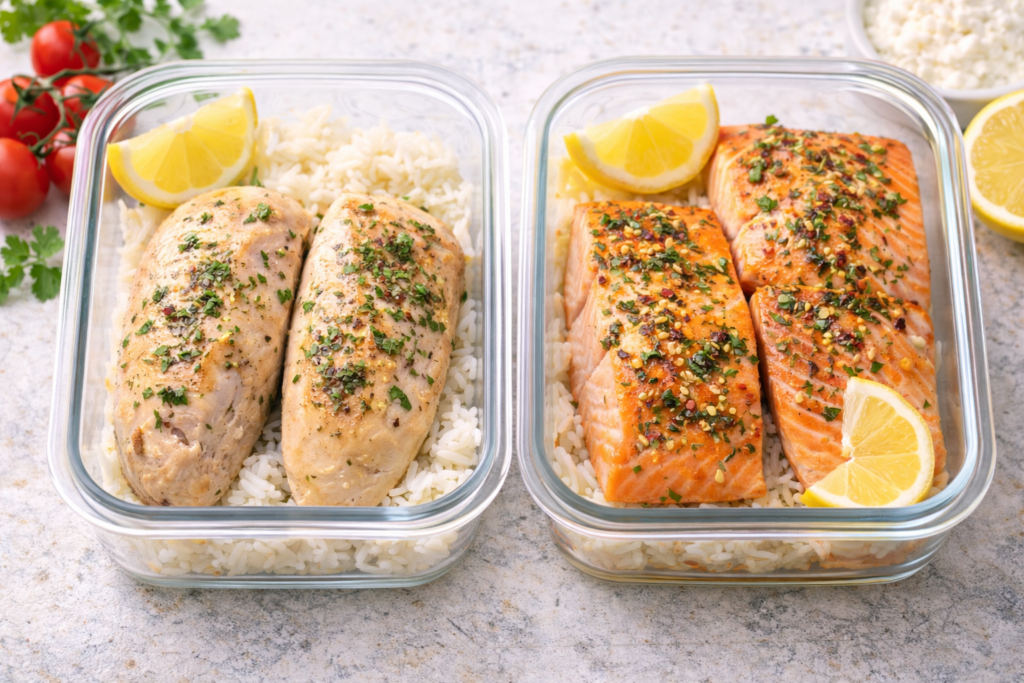
1. Chicken Breast
Chicken breast is the classic staple for a reason. It is incredibly lean, packed with protein, and versatile enough to take on almost any flavour profile. Whether you grill it, bake it, or toss it into a slow cooker, it remains one of the most efficient whole-food protein sources available. It’s perfect for meal prepping because it holds up well in the fridge for several days.
- Estimated Macros (per 4 oz / 112g cooked):
- Calories: 165
- Protein: 31g
- Carbs: 0g
- Fat: 3.6g
2. Greek Yogurt (Plain, Non-Fat)
For a quick breakfast or a high-protein snack, Greek yogurt is unbeatable. Unlike regular yogurt, Greek yogurt is strained to remove excess whey, resulting in a thicker, creamier texture and significantly higher protein content. It is also a source of probiotics, which support gut health. You can use it as a base for savoury dips or sweet parfaits.
- Estimated Macros (per 1 cup / 170g):
- Calories: 100
- Protein: 17g
- Carbs: 6g
- Fat: 0.4g
If you enjoy high-protein dairy options, check out our guide to high-protein vegetarian meals for more real-food ideas.
3. Canned Tuna
When you need a meal in under five minutes, canned tuna is a lifesaver. It is shelf-stable, inexpensive, and requires zero cooking. Tuna is rich in omega-3 fatty acids, which are important for heart and brain health. Look for tuna packed in water to keep the calories lower, or olive oil for healthy fats. It’s one of the most convenient whole-food protein sources for lunch on the go.
- Estimated Macros (per 1 can / 165g drained):
- Calories: 191
- Protein: 42g
- Carbs: 0g
- Fat: 1.4g
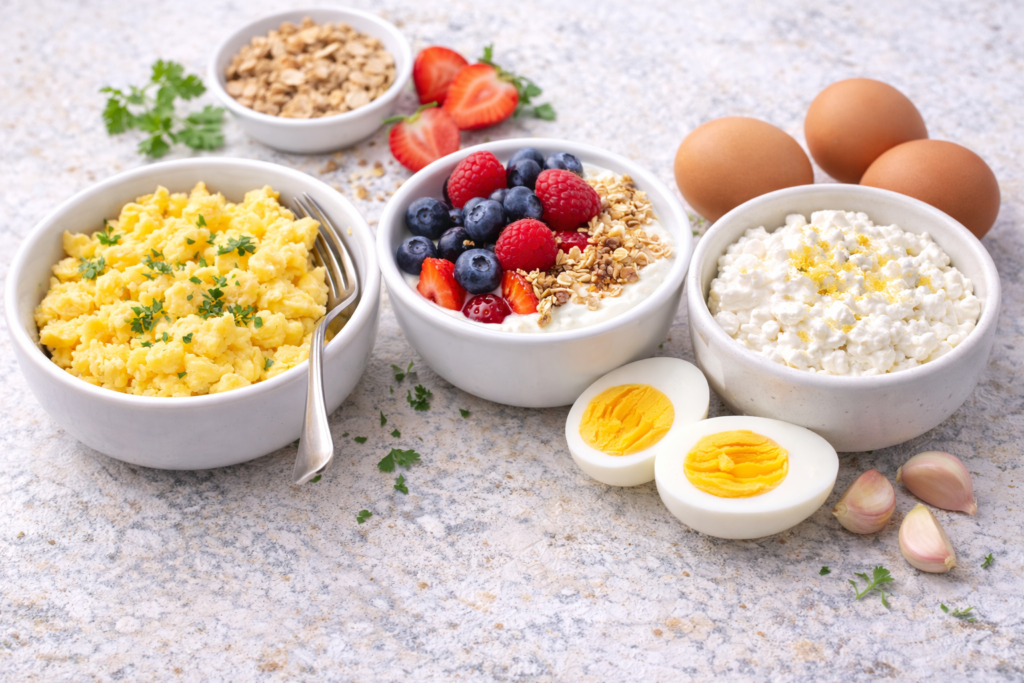
4. Eggs
Eggs are often referred to as nature’s multivitamin. They provide a complete protein profile, meaning they contain all nine essential amino acids your body cannot make on its own. Beyond protein, eggs are rich in choline and B vitamins. Hard-boiled eggs make for portable snacks, while scrambled eggs can be a quick dinner when the fridge is nearly empty.
- Estimated Macros (per 2 large eggs):
- Calories: 143
- Protein: 12g
- Carbs: 0.7g
- Fat: 9.5g
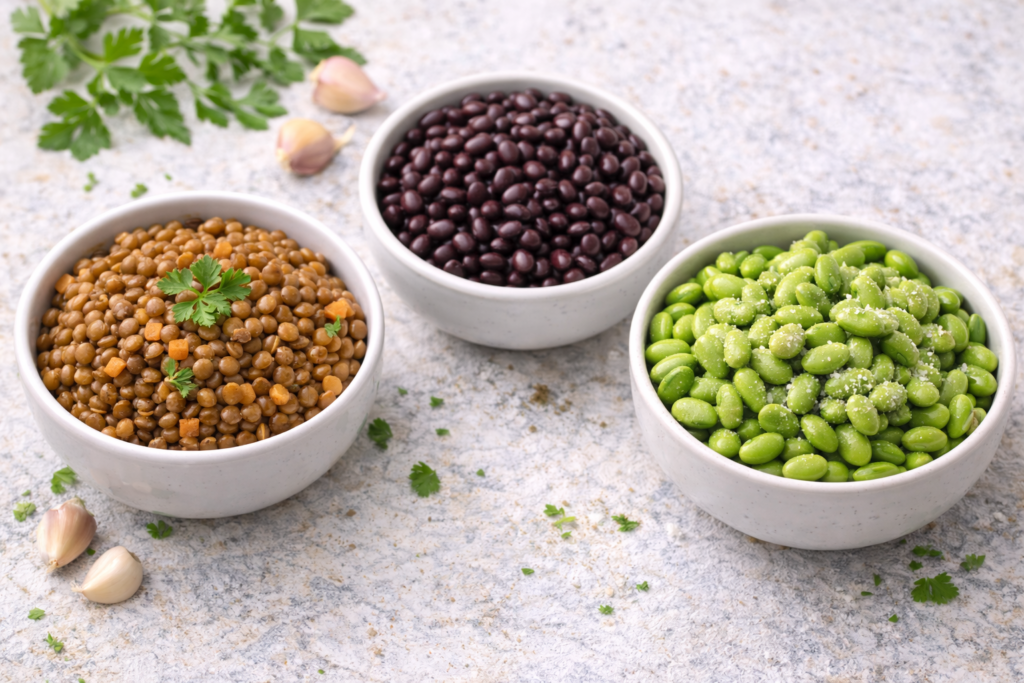
5. Lentils
For a plant-based option, lentils are a nutritional powerhouse. They are high in fibre, which aids digestion and promotes heart health. Unlike dried beans that require soaking, lentils cook relatively quickly (in about 20-30 minutes). They are perfect for soups, stews, and salads, making them one of the best budget-friendly whole-food protein sources. According to the USDA’s MyPlate guidelines, varying your protein routine with plant sources like lentils adds essential nutrients without saturated fat.
- Estimated Macros (per 1 cup cooked):
- Calories: 230
- Protein: 18g
- Carbs: 40g
- Fat: 0.8g
6. Lean Ground Beef (90% Lean)
Red meat can be part of a healthy diet when you choose leaner cuts. Ground beef is incredibly easy to cook and family-friendly—think tacos, pasta sauces, or burger bowls. It provides essential nutrients like iron, zinc, and Vitamin B12, which are crucial for energy levels. Choosing 90% lean or higher ensures you get the protein benefits without excessive saturated fat.
- Estimated Macros (per 4 oz / 112g cooked):
- Calories: 200
- Protein: 23g
- Carbs: 0g
- Fat: 11g
7. Cottage Cheese (Low Fat)
Cottage cheese has made a major comeback, and for good reason. It is a slow-digesting protein source (rich in casein), making it a great option for keeping you full. It is incredibly versatile; you can eat it plain with fruit, blend it into sauces for creaminess without the fat, or bake it into egg muffins. It represents one of the easiest vegetarian whole-food protein sources to include in your weekly shop.
- Estimated Macros (per 1 cup / 226g):
- Calories: 163
- Protein: 28g
- Carbs: 6g
- Fat: 2.3g
8. Salmon
Salmon is a fatty fish that delivers a high protein punch along with substantial amounts of heart-healthy omega-3 fats. These healthy fats are essential for reducing inflammation and supporting brain health. Baking or air-frying salmon takes less than 15 minutes, making it a “fast food” that is actually good for you.
- Estimated Macros (per 4 oz / 112g cooked):
- Calories: 230
- Protein: 25g
- Carbs: 0g
- Fat: 14g
9. Black Beans
Black beans are a pantry staple that can bulk up any meal. They offer a combination of protein and fibre that stabilizes blood sugar levels. They are excellent in burritos, soups, or even as a side dish. As noted by Healthline nutrition experts, combining legumes like beans with other whole foods is a smart way to meet daily protein needs affordably.
- Estimated Macros (per 1 cup cooked):
- Calories: 227
- Protein: 15g
- Carbs: 41g
- Fat: 0.9g
Not sure what your daily protein intake should be? Check out this quick guide.
10. Edamame (Soybeans)
Edamame serves as a fantastic snack or salad topper. It is one of the few plant-based, whole-food protein sources that is considered a complete protein. You can buy them frozen (shelled or in the pod) and steam them in the microwave in minutes. They add a nice texture and nutritional boost to stir-fries and grain bowls.
- Estimated Macros (per 1 cup cooked):
- Calories: 188
- Protein: 18g
- Carbs: 14g
- Fat: 8g
| Food | Calories | Protein | Best For |
|---|---|---|---|
| Chicken Breast | 165 | 31g | Lean meal prep |
| Greek Yogurt | 100 | 17g | Breakfast/snacks |
| Canned Tuna | 191 | 42g | Quick lunches |
| Eggs | 143 | 12g | Affordable meals |
| Lentils | 230 | 18g | Plant-based protein |
| Lean Ground Beef | 200 | 23g | Family dinners |
| Cottage Cheese | 163 | 28g | High-satiety snack |
| Salmon | 230 | 25g | Omega-3 rich dinners |
| Black Beans | 227 | 15g | Budget meals |
| Edamame | 188 | 18g | Easy snack |
How to Add More Whole-Food Protein to a Busy Schedule
Incorporating more whole-food protein sources into your diet doesn’t have to be complicated or time-consuming. The key is preparation and simplicity.
First, embrace the “cook once, eat twice” method. If you are cooking chicken breasts or ground beef for dinner, cook double the amount. The leftovers can be used for lunches the next day, saving you time and ensuring you have a healthy meal ready to go. This simple habit drastically reduces the friction of trying to eat healthy during a busy work week.
Second, keep your pantry and freezer stocked with “emergency” protein. Canned tuna, canned beans, frozen edamame, and frozen shrimp are ingredients that don’t spoil quickly and can be turned into a meal in 15 minutes. When you have these items on hand, you are less likely to order takeout when plans change or meetings run late.
Finally, think about protein at every meal, including breakfast. Many people skip protein in the morning in favour of toast or cereal, which leads to hunger later. Adding Greek yogurt, cottage cheese, or eggs to your morning routine sets a positive tone for the day and helps regulate your appetite.
Who This Guide is For
This guide is designed for busy adults who want to prioritize real food over supplements. It’s ideal for working professionals, parents, students, and anyone trying to improve their diet without adding complexity. If you’re focused on fat loss, muscle maintenance, stable energy levels, or simply reducing processed foods, these whole-food protein sources provide a sustainable foundation. Whether you eat meat, follow a mostly plant-based diet, or fall somewhere in between, these options fit easily into everyday meals.
Frequently Asked Questions
What is the healthiest whole-food protein source? There isn’t one single “best” option. Lean meats, fatty fish like salmon, legumes, eggs, and dairy all provide high-quality protein along with additional nutrients.
Can whole-food protein help with weight loss?
Yes. Whole-food protein sources increase satiety, reduce cravings, and require more energy to digest compared to fats and carbohydrates.
How much protein do busy adults need daily?
Most adults benefit from 0.8–1.6 grams of protein per kilogram of body weight, depending on activity level and goals.
Are plant-based proteins complete proteins?
Some plant-based foods like soy (edamame) are complete proteins. Others can be combined throughout the day (beans + grains) to provide all essential amino acids.
Final Thoughts on Whole-Food Protein
Switching your focus to whole-food protein sources is one of the most impactful changes you can make for your health. It simplifies your grocery shopping, supports your metabolism, and provides the sustained energy required to navigate a busy life. You don’t need complex rules or expensive products—just a commitment to putting real, nutrient-dense food on your plate.
Start by picking two or three of the protein sources listed above and adding them to your grocery list this week. Experiment with simple recipes, find what your family enjoys, and observe how much better you feel when your body is properly fueled. Remember, healthy eating is a journey, not a destination. Small, consistent choices to include quality protein will add up to significant long-term benefits.
Disclaimer: This content is for informational purposes only and does not constitute medical advice. Please consult with a healthcare professional or registered dietitian before making significant changes to your diet or exercise routine.
Pingback: Protein vs Carbs: Which of 2 Is Better for Sustained Energy?